


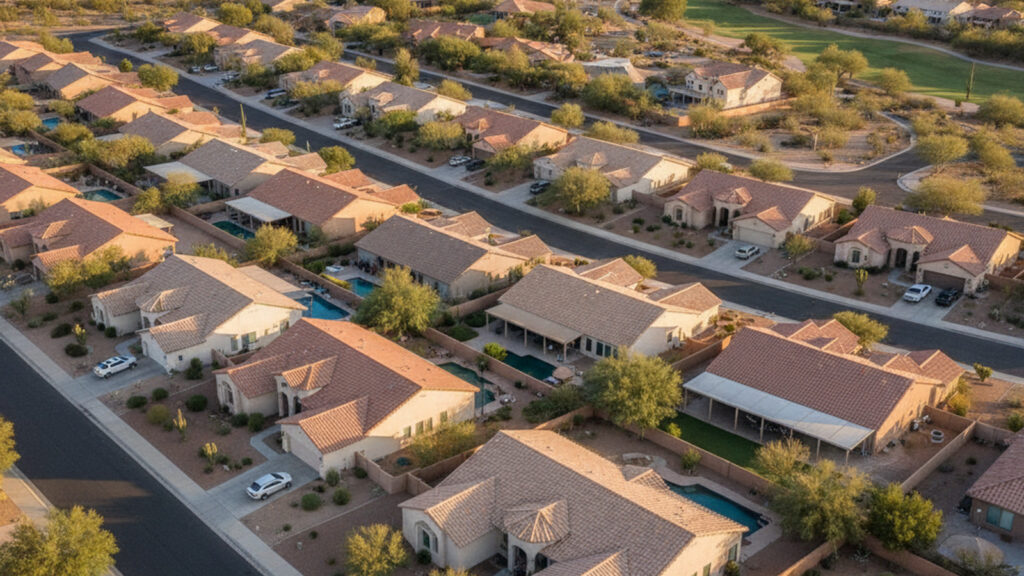
The median home price in Surprise, AZ is currently around $435,000, and homes are sitting on the market an average of 78 days. That’s enough runway to get your finances in order before you make an offer – but only if you know what you’re actually budgeting for. This is especially true for first-time home buyers in Surprise, AZ. The down payment gets all the attention, and then buyers show up at the table surprised by the stack of fees required to close.
Those fees cover the administrative, legal, and lending services involved in transferring ownership. Know what you’ll owe before you get there and you avoid last-minute scrambling. This guide breaks down how much these fees run, who customarily pays what in Maricopa County, and how to estimate your total cash to close.
What Closing Costs Are in Arizona
Closing costs are the collection of fees, taxes, and prepayments required to finalize a real estate transaction. Every time a home changes hands in Surprise, third parties – title companies, lenders, the county recorder – charge for their services. These expenses are separate from your down payment and are due when you sign your final paperwork.
Both the buyer and the seller have distinct sets of fees they’re responsible for. In Arizona, the standard residential purchase contract outlines who pays for what, though many of those assignments are open to negotiation.
Closing Costs Compared to Down Payments
Your down payment is the portion of the purchase price you pay upfront – it becomes equity immediately. Closing costs don’t add to your equity. They’re the price of executing the transaction and securing the loan, and that’s it.
A lot of buyers lump these two numbers together when they’re figuring out how much to save. Keep them separate. You need to know exactly how much goes toward the loan and how much goes toward the fees that make it happen.
Buyer vs. Seller Responsibilities
Sellers typically pay the real estate agent commissions, which make up the bulk of their expenses. Buyers take on the costs tied to securing a mortgage, getting the property appraised, and funding their initial escrow accounts. Certain neutral fees – like those charged by the escrow company – are handled according to local custom.
How Much Buyers Pay in Closing Costs
Typical buyer closing costs in Arizona run between 2% and 5% of the purchase price. On the current Surprise median of $435,000, that’s somewhere between $8,700 and $21,750. Where you land in that range depends on your loan type, down payment size, and the property’s specific tax situation.
Statewide averages put closing costs at roughly 1.15% of the purchase price – around $4,701 including taxes – but that number is pulled down by cash buyers who skip lender fees entirely. If you’re financing, plan for 2% to 5%.
Are Buyer Fees Always 3 Percent?
Three percent is a reasonable starting estimate, not a rule. A buyer putting 20% down on a conventional loan might land closer to 2%. An FHA buyer with an upfront mortgage insurance premium rolled in can push toward 5%. Use 3% to set a savings target, but don’t treat it as a ceiling.
Why Phoenix Metro Costs Vary
Property taxes and HOA dues move your total more than most buyers expect. Lenders require you to prepay several months of taxes and insurance upfront to fund an escrow account, and because those rates differ between Surprise neighborhoods, two homes at the exact same purchase price can carry meaningfully different closing costs.
Example Closing Costs by Home Price in Surprise
Running the numbers at a few price points gives you a clearer savings target than a percentage alone. Since buyer costs generally fall between 2% and 5%, you can map out a reasonable range for whatever segment of the Maricopa County market you’re shopping.
Below the median, your absolute dollar costs are lower – but lender fees tend to make up a larger share of the total. Higher-priced homes scale up title insurance and prepaid tax requirements.
Estimated Fee Breakdown by Purchase Price
On a $300,000 townhome or condo, buyers typically pay between $6,000 and $15,000. A $400,000 single-family home moves that range to $8,000 to $20,000. At $500,000, expect $10,000 to $25,000.
A $600,000 home in one of the newer master-planned communities will likely put you between $12,000 and $30,000. All of these assume you’re financing the purchase – cash buyers will see significantly lower totals.
Calculating Your Own Costs
The only document that gives you a precise number is the Loan Estimate from your lender. It breaks every charge down to the dollar. Until you have a specific property under contract, multiplying your target purchase price by 0.03 is your most practical baseline.
Itemized Breakdown of Buyer Fees in Maricopa County
The broad percentages give you a range, but knowing the individual line items is what keeps you from being caught off guard. Your final settlement statement will list dozens of specific charges. Most fall into predictable categories tied to the loan, the title, and the local government.
Maricopa County has well-established customs for who pays what. The Arizona Residential Purchase Contract allows for negotiation, but most transactions follow standard regional practice.
Loan and Lender Charges
Buyers cover all lender fees. That means the loan application fee, the underwriting fee, and the cost of the credit report. You’ll also pay for the appraisal, which the lender requires to confirm the property’s value matches what you’ve agreed to pay.
Title Insurance Customs in Arizona
Title insurance protects against undiscovered claims or defects in the property’s history. In Arizona, it’s customary for the seller to pay for the ALTA Homeowner’s Title Insurance Policy, which protects your equity. You, the buyer, typically pay for the Lender’s Title Insurance Policy – the one that protects the bank.
Escrow Fees
The escrow company is the neutral third party that holds the funds and coordinates the final paperwork. In Arizona, buyers and sellers typically split the escrow and settlement costs equally. State-regulated escrow fee schedules dictate that unless otherwise instructed in writing, these fees are charged one-half to the buyer and one-half to the seller.
Transfer Taxes and Recording Fees
Arizona doesn’t have a statewide real estate transfer tax. Sellers pay a flat $2 transfer fee for the transaction. Recording the new deed and mortgage documents runs a flat $30 per document at the Maricopa County Recorder’s Office – and that one’s typically on the buyer.
Prepaids and Escrow Reserves
Your lender will require you to fund an escrow account at closing to cover future property taxes and homeowners insurance. You’ll typically pay a full year of homeowners insurance upfront, plus two to three months of property taxes. You’ll also pay prepaid interest covering the days between your closing date and your first official mortgage payment.
Who Pays What: Buyer vs. Seller
The division of fees in Surprise follows standard Maricopa County practice. Buyers handle the cost of borrowing money; sellers handle the cost of marketing the home and delivering a clear title.
Knowing this breakdown matters when you’re evaluating a counter-offer. If a seller asks you to cover something they’d normally pay, you can factor that into your offer price and respond accordingly.
Standard Buyer Expenses
Buyers typically pay origination fees, appraisal fees, credit report charges, and title search costs. Add to that the lender’s title insurance, the Maricopa County recording fees, and half the escrow service. Any mortgage insurance and prepaid interest required by your loan program are yours too.
Standard Seller Expenses
Sellers pay the real estate agent commissions – usually 5% to 6% of the sale price – plus about 0.4% to 2.6% of the home’s sales price in other closing costs. That second bucket includes the owner’s title insurance policy, their half of the escrow fee, and the $2 state transfer fee.
Asking the Seller to Cover Your Fees
You can ask the seller to pay a portion of your closing costs through a concession written into the purchase offer. Whether that request lands depends on how much competition a particular home is drawing. It’s a negotiating tool, not a given.
Ways to Reduce Your Out-of-Pocket Costs
Not every fee is fixed. Third-party costs like appraisals and county recording fees are what they are, but other charges leave room to work.
With a median time on market of 78 days in Surprise, sellers aren’t always in a position to dismiss a reasonable ask. Explore your options before you sign.
Seller Concessions and Credits
If a home has been sitting or needs minor repairs, a seller credit can be a cleaner solution than a price reduction. The seller contributes a set dollar amount or percentage toward your closing costs. Loan programs do cap how much a seller can contribute – usually between 3% and 6% of the purchase price – so know your limit before you ask.
Lender Credits and Shopping Around
A lender credit lets the bank cover some or all of your closing costs in exchange for a slightly higher interest rate. Your upfront cash drops, but your monthly payment goes up. That’s a trade-off worth modeling before you commit. You should also get Loan Estimates from multiple lenders and compare origination and underwriting fees directly – they vary more than most buyers realize.
Frequently Asked Questions
How much are buyer closing costs on an average home in Surprise, AZ?
Expect to pay between 2% and 5% of the purchase price, depending on your loan type. For the current Surprise median home price of $435,000, that works out to roughly $8,700 to $21,750.
Does the city of Surprise charge any specific real estate transfer taxes or local fees to buyers?
No. Neither Surprise nor the state of Arizona charges a percentage-based real estate transfer tax. The only related government fees are a $2 flat transfer fee paid by the seller and a flat $30 per document recording fee at the Maricopa County Recorder’s Office.
Is it common for sellers to pay the buyer’s closing costs in the current Surprise real estate market?
It depends on the property and current buyer demand. With Surprise homes spending an average of 78 days on the market, some sellers may be willing to offer closing cost concessions to keep a deal moving.
Are HOA capitalization and transfer fees in Surprise master-planned communities typically paid by the buyer or the seller?
It depends on your purchase agreement. The standard Arizona Residential Purchase Contract allows the buyer and seller to negotiate who covers various components of the transaction, so you can ask the seller to take on those fees.
Related Surprise Homebuyer Resources
Reviewed and updated: . This guide is educational and is not lending or financial advice. Rates, programs, fees and eligibility vary; consult a licensed lender and other qualified professionals. Learn more about Shannon Biszantz.